
Terapia de realidad virtual
para Autism: Skills That Stick
Many autistic kids struggle to learn social and life skills, especially when the real world feels loud, busy, or full of surprises.
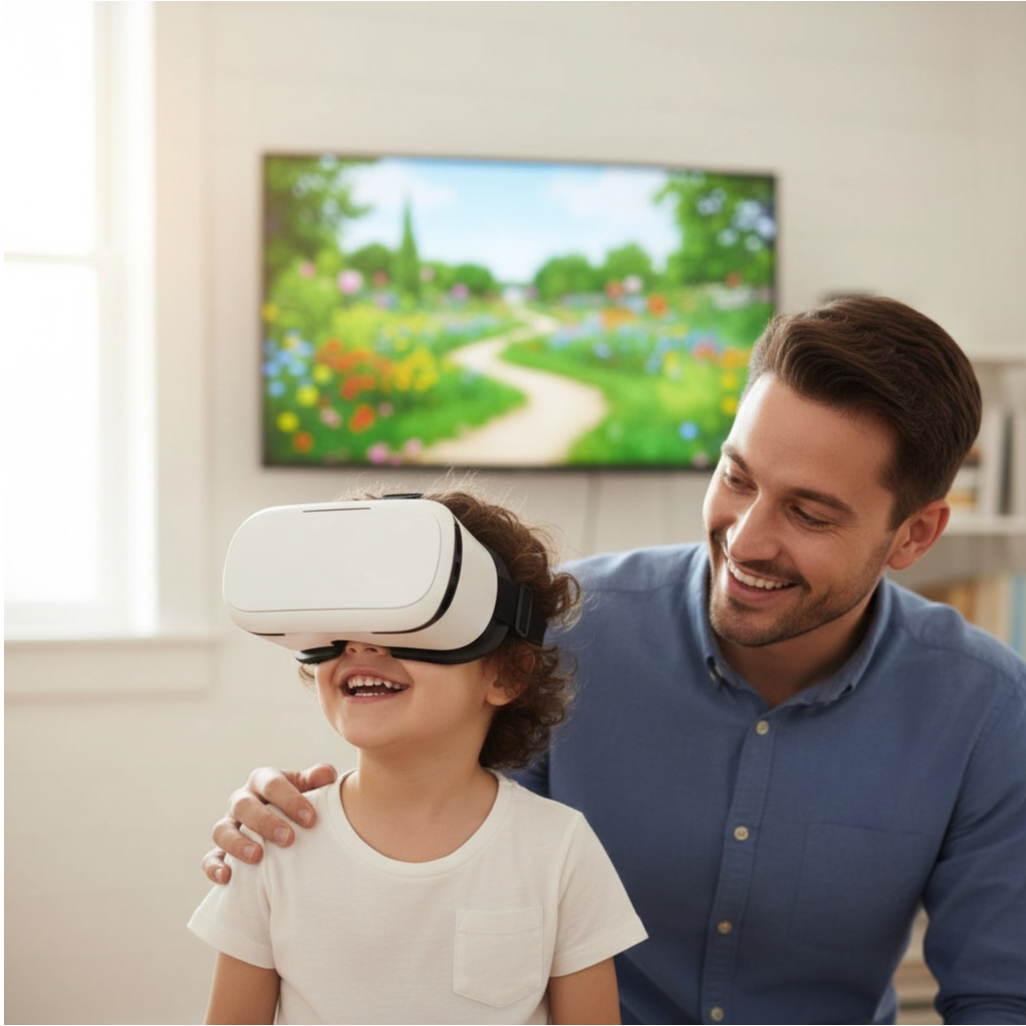
VR therapy creates a safe, controlled space where learners practice essential skills at their own pace.
¿Qué es la terapia de realidad virtual?
Al ponerse un casco de realidad virtual, los alumnos pueden adentrarse en entornos interactivos diseñados para enseñar habilidades como:

Learners repeat each skill as often as they need, with no pressure. That practice prepares them for the moment it happens in real life.
Studies and clinical programs point to real gains from VR learning. Autistic learners build social communication, behavior, and daily living skills.
Why Virtual Reality Helps Kids & Teens with Autism
Crossing a busy street
Navigating a crowded store
Starting conversations with peers
Managing unexpected changes in routine
Real-world situations are hard to replicate safely during therapy.
Virtual reality lets learners practice these experiences safely—without real-world pressure or consequences.

VR therapy helps learners:
Skills That Come to Life in VR
Habilidades sociales
Practice interactions in a judgment-free zone. Learners build confidence before trying new social situations in the real world.
Regulación emocional
Learn to recognize and manage emotions. Immersive lessons help kids stay calm when situations feel overwhelming.
Safety Skills
Practice real safety scenarios in a controlled environment. No risk, all the learning.
Daily Living Skills
Master everyday moments. Learners rehearse real-world activities and build independence.
Una experiencia de apoyo y orientación.
La terapia de realidad virtual en Guidepost ABA siempre está guiada por profesionales capacitados. Your child never practices alone.
A therapist helps by:
VR doesn't replace therapy—it strengthens it by making skill practice easier and more engaging.
Ready to See VR Therapy in Action?
Every child learns differently. VR therapy can unlock new skills and build confidence. Schedule a consultation to learn if it's right for your child.
Questions About VR Therapy?
Is VR therapy safe for my child?
Yes. Our VR therapy is always conducted with a trained therapist present. We start slowly, use age-appropriate scenarios, and monitor your child's comfort level throughout each session.
Does VR replace traditional ABA therapy?
No. VR therapy is a powerful tool that strengthens ABA therapy. It provides practice opportunities for skills learned in sessions, and reinforces real-world learning in a supportive environment.
How often should my child use VR therapy?
Frequency depends on your child's needs and goals. Your therapist will recommend a schedule that works best for your family—typically 1-2 sessions per week.
What ages can benefit from VR therapy?
VR therapy can benefit children, teens, and young adults ages 5 and up. We customize scenarios to match each learner's age, interests, and skill level.
Do you accept insurance for VR therapy?
Yes, we work with most major insurance plans. Contact our team to verify coverage and discuss payment options for your family.
Bríndele a su hijo el apoyo que necesita en la escuela.
Preguntas frecuentes
La terapia ABA en el ámbito escolar proporciona apoyo conductual y social dentro del aula de su hijo para mejorar la participación, la interacción con sus compañeros y la independencia.
No. Nuestros técnicos de comportamiento certificados brindan apoyo a su hijo dentro del aula, colaborando con los maestros y el personal.
En algunos casos, sí. Colaboramos con las familias y los equipos escolares para determinar cómo se integran los servicios en el plan educativo de su hijo.
Los terapeutas brindan apoyo estructurado durante las interacciones entre compañeros, las actividades grupales y las transiciones para fortalecer la confianza social y la comunicación.